
Can Estrogen Therapy Treat Depression During Perimenopause?
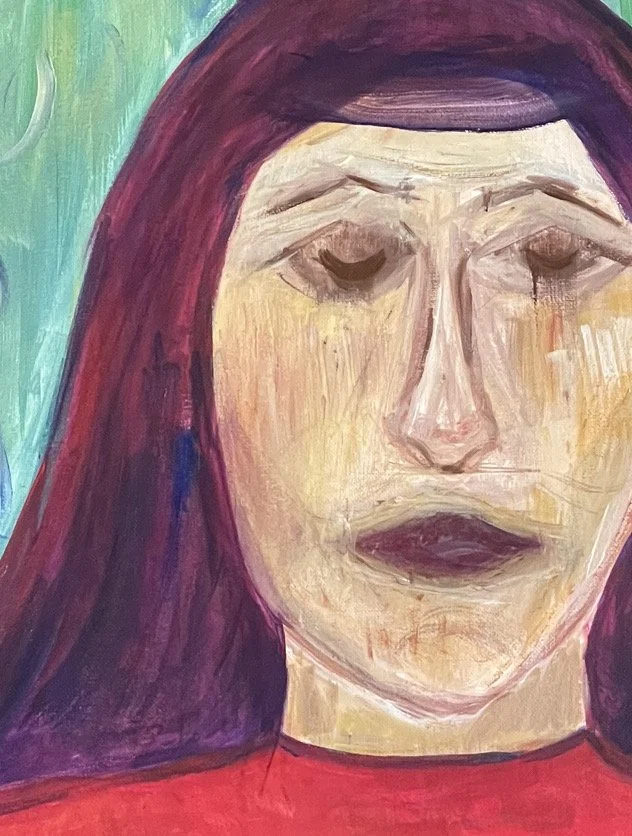
Mary’s Tears (Acrylic on Canvas by Jacquelyn Paykel)
Hormonal Agents for the Treatment of Depression Associated with the Menopause
Megan Herson, Jayashri Kulkarni
Bottom Line Up Front:
Many women going through menopause or the years leading up to it experience depression linked to changing hormone levels—especially drops in estrogen. Regular antidepressants often help only a little in these cases. New research suggests that hormone-based treatments, such as estrogen therapy and certain “estrogen-like” medicines, may improve mood during this life stage. More good-quality studies are needed to confirm the safest and most effective options.
Patient Story – Eileen’s Journey
Eileen is 54 years old and works as a family physician in a busy clinic. Over the past two years, she’s noticed her menstrual cycles have become unpredictable—sometimes skipping a month or two, sometimes arriving early. Along with these changes, she’s been feeling “off.” She’s losing patience more easily, both at work and at home. Her partner has even commented that she’s “much moodier” than she used to be.
Eileen has a history of depression, but in the past it was well managed with a low-dose antidepressant, therapy, and exercise. Lately, though, those strategies aren’t working as well. She’s more irritable, less motivated, and often feels a heaviness she can’t shake. Sleep is patchy, and she sometimes wakes up drenched in sweat, her heart pounding.
At her last check-up, Eileen asked her doctor if what she’s feeling could be connected to menopause. She learned she’s in perimenopause—the transition years before her periods stop completely. Hormone shifts during this time, especially the drop and fluctuations in estrogen, can affect mood, energy, and brain chemistry. Because her depression has worsened and her menopausal symptoms are affecting daily life, she’s wondering if hormone therapy might help.
Her doctor explains that for some women, estrogen therapy—sometimes in combination with progesterone—can improve mood, especially when standard antidepressants haven’t been enough. They discuss the possible benefits, like improved mood, better sleep, and reduced hot flashes, as well as the risks, including breast cancer and blood clot concerns. Together, they review Eileen’s personal and family health history to see if hormone therapy is a safe option for her.
Eileen leaves the appointment feeling hopeful. She’s not ready to decide yet, but she’s reassured to know that her symptoms are real, they’re not “just in her head,” and that there may be more targeted options—like hormone therapy—if her current plan isn’t enough.
Article Summary:
Menopause is a natural stage of life that usually happens between ages 42–52. It’s marked by irregular periods and ends one year after periods stop completely. The transition (perimenopause) often comes with symptoms like hot flashes, night sweats, and sleep problems—but it can also bring on or worsen depression. This is partly because estrogen, a key female hormone, plays an important role in brain health, mood, and memory. As estrogen levels drop, brain chemicals such as serotonin and dopamine—which affect how we feel—can also be disrupted.
While bothersome symptoms like hot flashes can affect mood, studies show that depression risk is higher during menopause even when those symptoms aren’t present. Some women seem more sensitive to hormonal ups and downs, which may explain why they’re more likely to experience mood changes during this time.
Doctors often start with antidepressants, counseling, and healthy lifestyle changes. These can help, but some women don’t see enough improvement. Hormone therapy—especially estrogen delivered through the skin (patches, gels)—has been shown in several studies to ease depression during menopause, and it can be even more effective when combined with antidepressants. Newer medicines called selective estrogen receptor modulators (SERMs) act like estrogen in the brain and bones but don’t affect the breast or uterus the same way. These may be promising for mood, but more research is needed.
Hormone treatments are not right for everyone. Risks can include breast cancer, blood clots, and heart issues, so treatment should be personalized. Because there’s still no official medical definition for menopause-related depression, and research is limited, experts call for more studies to better guide care. For now, the evidence suggests that for some women, addressing hormonal changes directly—rather than only treating symptoms—may be the key to feeling better.
Full article is available here:
https://pmc.ncbi.nlm.nih.gov/articles/PMC9355926/pdf/40266_2022_Article_962.pdf